



This December, as the holiday season approaches and preschool breaks draw near, our preschool classrooms have been buzzing with one story in particular: The Gingerbread Man. At first glance, it might seem like a simple seasonal tale, but in a bilingual preschool setting, it becomes a powerful learning experience that blends language, culture, and joy.
Originally an American folk story, The Gingerbread Man is also widely used in French early education because of its rhythm, repetition, and playful structure. This makes it a natural bridge between cultures and languages, especially during the holiday season.
Learning Through Play and Real Experience
In preschool, the best learning happens when children are doing, not just listening. With The Gingerbread Man, students spent time beyond storytime:
Across classrooms, preschoolers explored the story using pictures, puppets, and repetition, helping them build vocabulary and understand story structure (beginning, middle, end). They also discovered different versions of the tale, learning that stories can evolve while keeping the same narrative framework.


Learning extended beyond storytime:
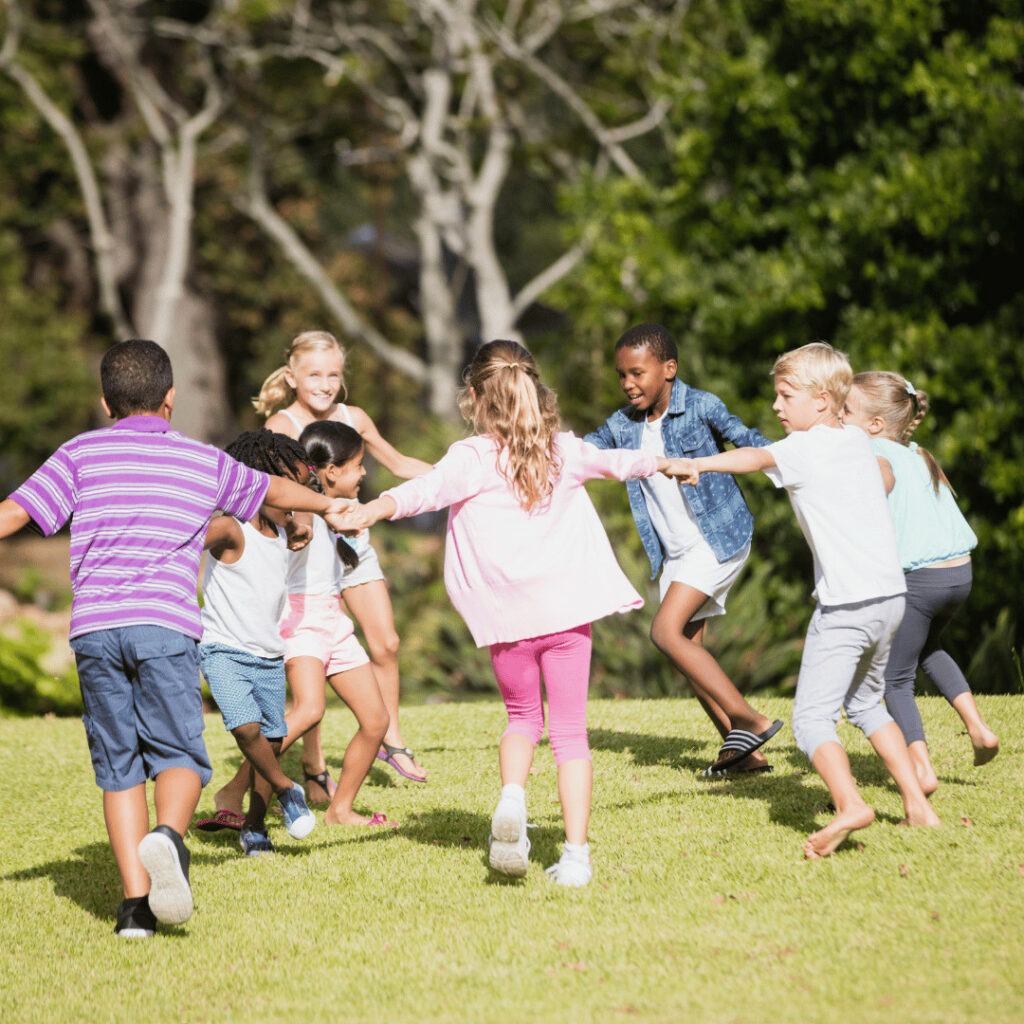
- Children took part in a Gingerbread Man chase around the school, following clues that encouraged listening, teamwork, and movement
- They baked gingerbread together, naming utensils and ingredients while following steps in sequence


In another classroom, the focus shifted to the Gingerbread Man as a classic “chase” story.
- Students practiced retelling events, worked on sequencing, and developed body awareness by reconstructing gingerbread figures and shaping dough.
- During bilingual science time, students explored the human body (body schema) and created gingerbread men out of salt dough with instruction in both English and French.
Parents may notice that these moments feel more like play than structured lessons, and this is by design. When children are emotionally engaged and having fun, language and cognitive skills deepen naturally.
Holiday Fun That Builds Real Skills
By the end of the project, students weren’t just familiar with a story. They had practiced skills they use every day in the classroom:
- Language development: using new vocabulary naturally in both English and French
- Math and logic: following sequences, understanding order, and recognizing steps, from story events to recipe instructions
- Science and body awareness: exploring the human body through hands-on activities and movement-based learning
- Listening and collaboration: responding to clues, following directions, and working as part of a group
- Creativity and fine motor skills: Students decorated gingerbread figures and classroom doors, strengthening fine motor skills and creative expression.


These are the building blocks for early reading, clear communication, and classroom confidence.
Why Playful, Bilingual Learning Works
As the holiday break approaches, this project reflects what meaningful bilingual education looks like. Learning is playful, culturally connected, and grounded in real experience.
Students were using both languages to explore ideas, follow instructions, and make sense of the world together. What looks like a holiday story is also careful preparation for what comes next: listening with purpose, expressing ideas clearly, and feeling confident learning across two languages.
When learning feels like fun, it becomes memorable. And that is one of the best gifts we can give our youngest students this season.


